fbpx

Pet Grooming Guide: How Frequently Should Your Pet Be Groomed?

Pet Grooming Guide: How Frequently Should Your Pet Be Groomed? | Spotless Groomers
Ready to set up a regular grooming schedule? Call (913) 608-4520 — mobile grooming across Johnson County & KC Metro
Book Appointment →

Grooming is more than just a luxury for pets — it's an essential part of their health and happiness. From maintaining a clean coat to preventing skin infections, a consistent grooming schedule ensures your furry friend looks and feels their best. But how often should you groom your pet? The answer depends on their breed, coat type, and lifestyle.

In this guide, Spotless Groomers Mobile Grooming Service breaks down how frequently different pets should be groomed and why regular maintenance is key to their well-being.

Why Grooming Is Important for Your Pet

Grooming goes beyond aesthetics — it plays a crucial role in your pet's overall health. Here are the key benefits of maintaining a regular grooming schedule:
Prevents Matting & Shedding
Regular brushing removes loose fur and prevents painful mats, especially for long-haired pets.
Reduces Skin Issues
Bathing eliminates dirt, allergens, and bacteria that can cause irritation or infections.
Keeps Nails Healthy
Overgrown nails cause discomfort, affect mobility, and lead to joint issues over time.
Enhances Comfort & Hygiene
Ear cleaning, paw care, and sanitary trims keep your pet fresh and comfortable year-round.
Allows Early Health Detection
Grooming gives you a chance to spot lumps, bumps, or skin changes that may need vet attention.
Strengthens Your Bond
Regular gentle grooming builds trust between pet and owner, reducing grooming anxiety over time.
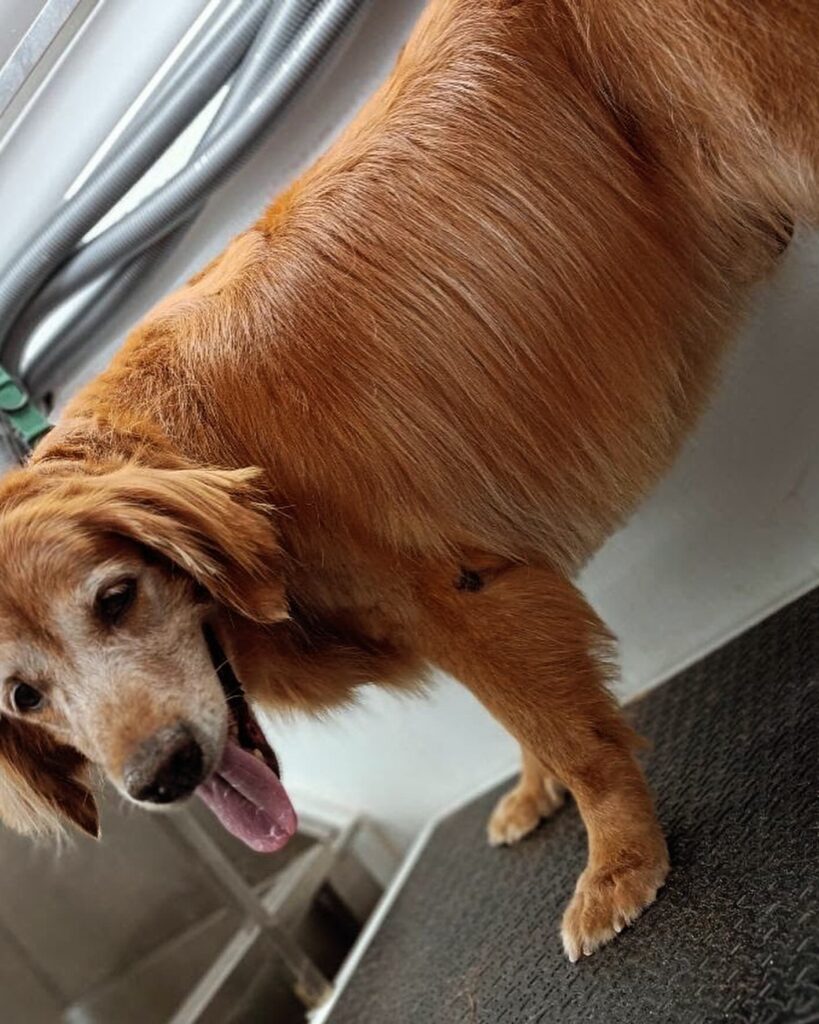
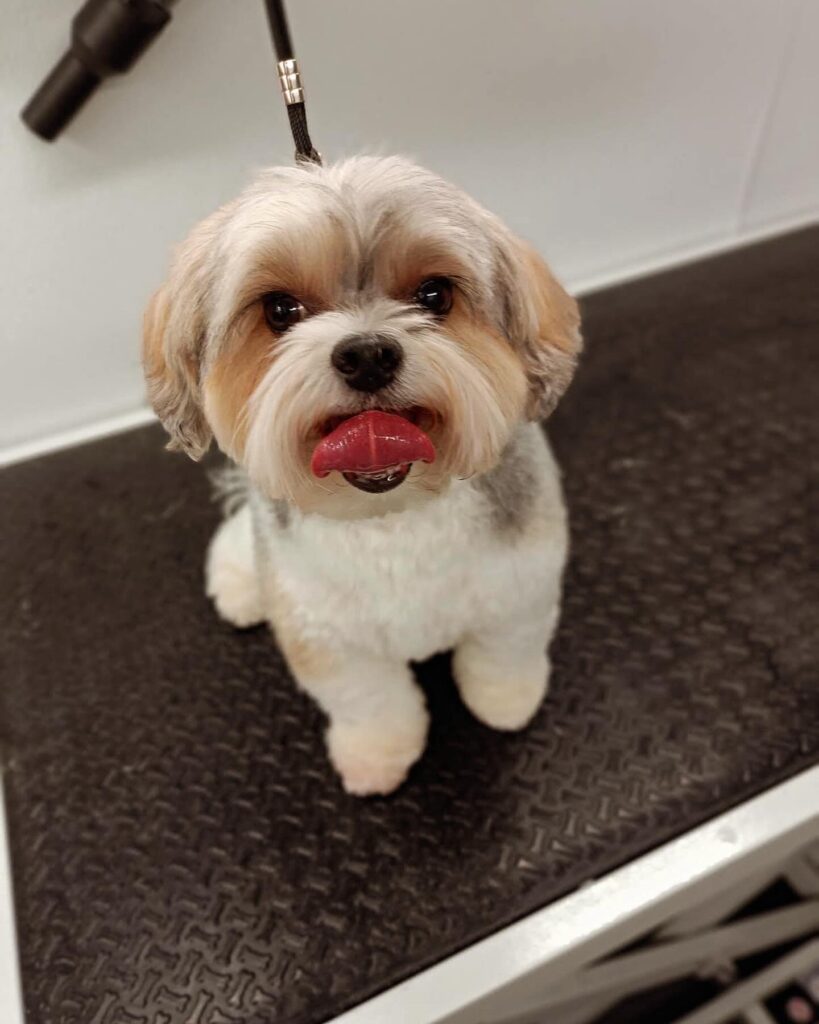
Simba — groomed by Spotless Groomers Lulu — groomed by Spotless Groomers Rapha — groomed by Spotless Groomers

Real dogs groomed by Spotless Groomers — Simba, Lulu & Rapha

How Often Should You Groom Your Dog?

Every pet has different grooming needs based on their coat type and activity level. Here's a detailed breakdown by breed type to help you determine the best schedule for your dog.

🐕
Short-Haired Dogs
Beagle · Boxer · Labrador Retriever · Dalmatian · Vizsla

Short-coated dogs are the lowest maintenance coat type but still need regular care to control shedding and maintain skin health. Their smooth coats lie flat and don't mat, but they can shed significantly year-round.

Brushing
Once a week
A rubber curry brush works best to loosen dead fur
Bathing
Every 1–2 months
More often if they swim or get muddy regularly
Nail Trimming
Every 3–4 weeks
Active dogs may naturally wear nails down
Ear Cleaning
Monthly
Check for redness or odor at each cleaning
🦮
Medium to Long-Haired Dogs
Golden Retriever · Shih Tzu · Australian Shepherd · Collie · Cocker Spaniel

Medium to long-coated dogs require more frequent brushing to prevent painful matting and tangling. These breeds often need professional grooming to maintain coat health, especially around ears, paws, and sanitary areas.

Brushing
2–3 times a week
Daily brushing during heavy shedding seasons
Bathing
Every 3–5 weeks
Condition coat after bathing to prevent dryness
Nail Trimming
Every 2–3 weeks
Longer coats can hide overgrown nails
Ear Cleaning
Every 2–4 weeks
Floppy-eared breeds need more frequent checks
🐩
Curly & Wavy-Coated Dogs
Poodle · Bichon Frise · Labradoodle · Goldendoodle · Portuguese Water Dog

Curly and wavy coats are the most high-maintenance coat type. They don't shed in the traditional sense — instead, dead hair gets trapped in the curls and mats rapidly without daily brushing. Professional haircuts every 4–6 weeks are essential.

Brushing
Daily or every other day
Slicker brush or metal comb prevents matting
Bathing & Haircut
Every 4–6 weeks
Coat grows continuously — haircuts are essential
Nail Trimming
Every 2–3 weeks
Curly coat can hide paw growth quickly
Ear Cleaning
Monthly
Hair grows inside ear canal — check regularly
🏃
Active & Outdoor Dogs
Any breed that spends significant time outdoors, hiking, or in dog parks

Active dogs that spend a lot of time outdoors accumulate dirt, allergens, and parasites much faster than indoor pets. Their grooming frequency should increase significantly during spring and summer in Kansas.

Bathing
More frequent
After outdoor activities, swims, or muddy play
Paw Checks
After every walk
Check for cuts, debris, or interdigital matting
Flea & Tick Check
After every outdoor session
Especially during Kansas spring & summer
Full Groom
Every 3–4 weeks
More frequent than indoor dogs of same breed

Set Up a Regular Grooming Schedule

We'll come to your home on your preferred frequency — Johnson County & KC Metro

Book Appointment →

How Often Should You Groom Your Cat?

While cats are known for self-grooming, they still benefit significantly from regular professional or owner-assisted grooming — especially long-haired breeds that are prone to matting.

🐱
Short-Haired Cats
Domestic Shorthair · Siamese · Bengal · British Shorthair · American Shorthair

Short-haired cats are largely self-sufficient groomers but still benefit from weekly brushing to reduce hairballs, seasonal shedding, and loose fur around your home.

Brushing
Once a week
Reduces hairballs and loose fur at home
Nail Trimming
Every 2–4 weeks
Prevents scratching and overgrowth
Bathing
Occasionally
Only if they get dirty or have skin conditions
Ear Check
Monthly
Look for wax buildup or dark discharge
😺
Long-Haired Cats
Persian · Maine Coon · Ragdoll · Norwegian Forest Cat · Siberian

Long-haired cats need significantly more grooming assistance. Their dense coats mat quickly, especially around the armpits, collar area, and hindquarters. Professional grooming every 4–6 weeks is highly recommended.

Brushing
3–4 times a week
Daily brushing prevents painful matting
Professional Groom
Every 4–6 weeks
Reduces oil buildup and prevents severe matting
Nail Trimming
Every 2–3 weeks
Long hair can hide nail growth
Bathing
Every 4–6 weeks
Reduces oil buildup and freshens coat
🐈
Senior or Less Active Cats
Any breed aged 10+ or cats with reduced mobility or health conditions

As cats age, they often reduce their self-grooming due to arthritis, reduced flexibility, or dental pain. They need more frequent human assistance to maintain coat health and hygiene.

Brushing
More frequent
Areas they can't reach need extra attention
Sanitary Area
Weekly check
Reduced flexibility makes self-cleaning difficult
Nail Trimming
Every 2–3 weeks
Senior cats' nails can become thickened
Professional Groom
Monthly
Gentle handling essential for arthritic cats

Pro tip for Kansas pet owners: During spring shedding season (March–May) and fall coat change (September–November), increase brushing frequency for all breeds by 50%. This dramatically reduces the amount of fur in your home and prevents matting during heavy coat transitions.

Spotless Groomers — Stress-Free Grooming at Your Doorstep

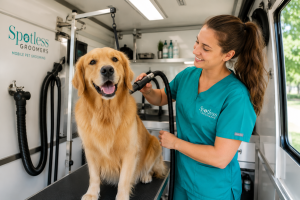
At Spotless Groomers, we understand that grooming can sometimes be stressful for pets. That's why we bring the salon experience straight to your home — a fully equipped mobile grooming unit providing a cage-free, one-on-one experience in a calm and familiar environment.

Convenience — No trips to the salon, professional service at your door
Personalized Care — One-on-one attention for your pet's specific needs
Full-Service — Bath, brush, nails, ears, and breed-specific styling
No Cages — Quiet, stress-free environment for anxious pets
Same-Week Available — Flexible scheduling across Johnson County
5★ Rated — Trusted by hundreds of pet owners across the KC Metro

📞 Book Your Pet's Grooming Appointment

Regular grooming is key to keeping your pet healthy and happy. Call (913) 608-4520 today.

Book Now →